
Doro wat: The soul of Ethiopian cuisine

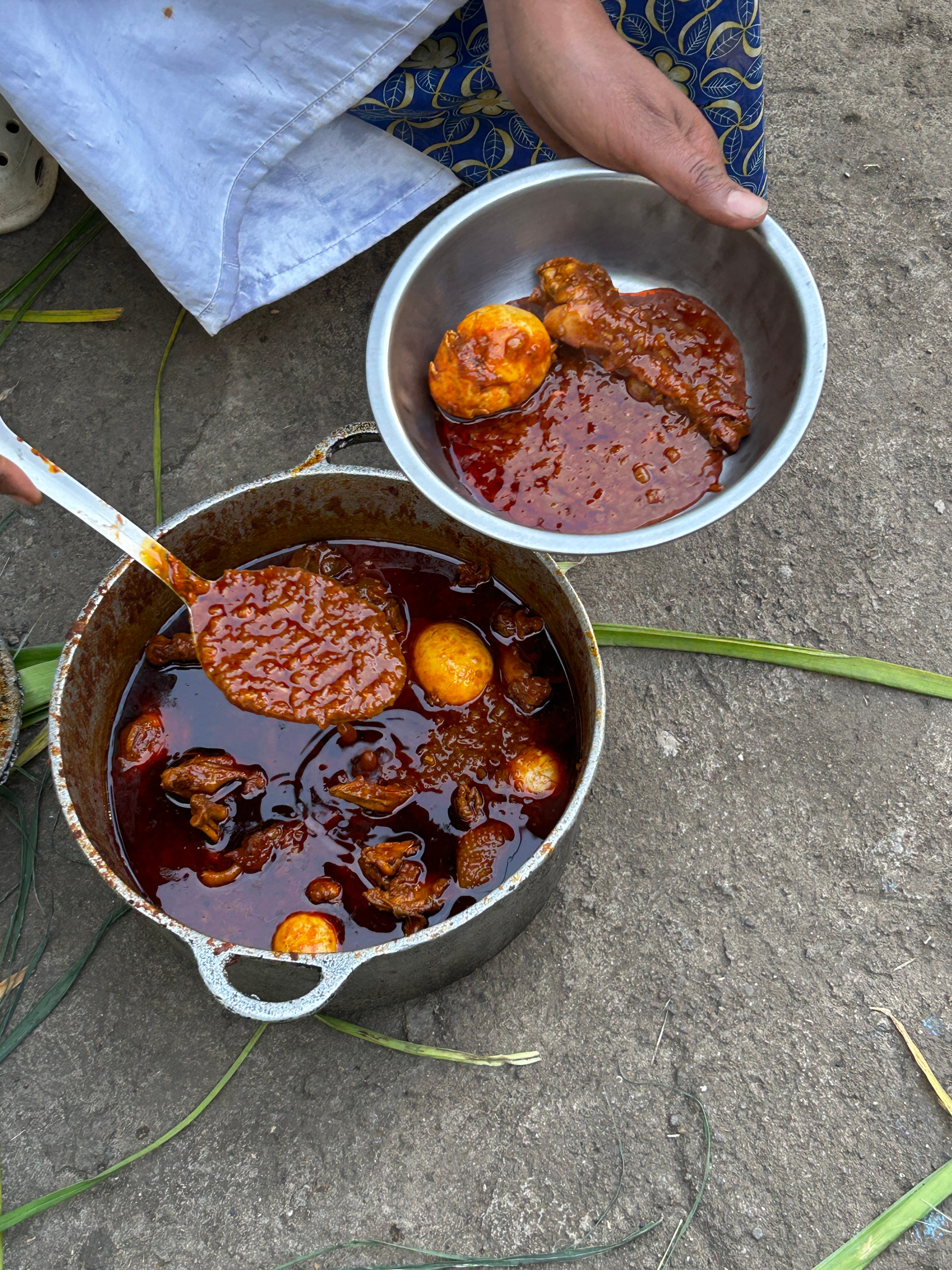
Serkalem, affectionately called Serke by friends and family, invited me to her home in Gondor to learn how to make Doro wat, Ethiopia’s National stew. To be honest, I was not ready for this masterclass in Ethiopian cuisine.
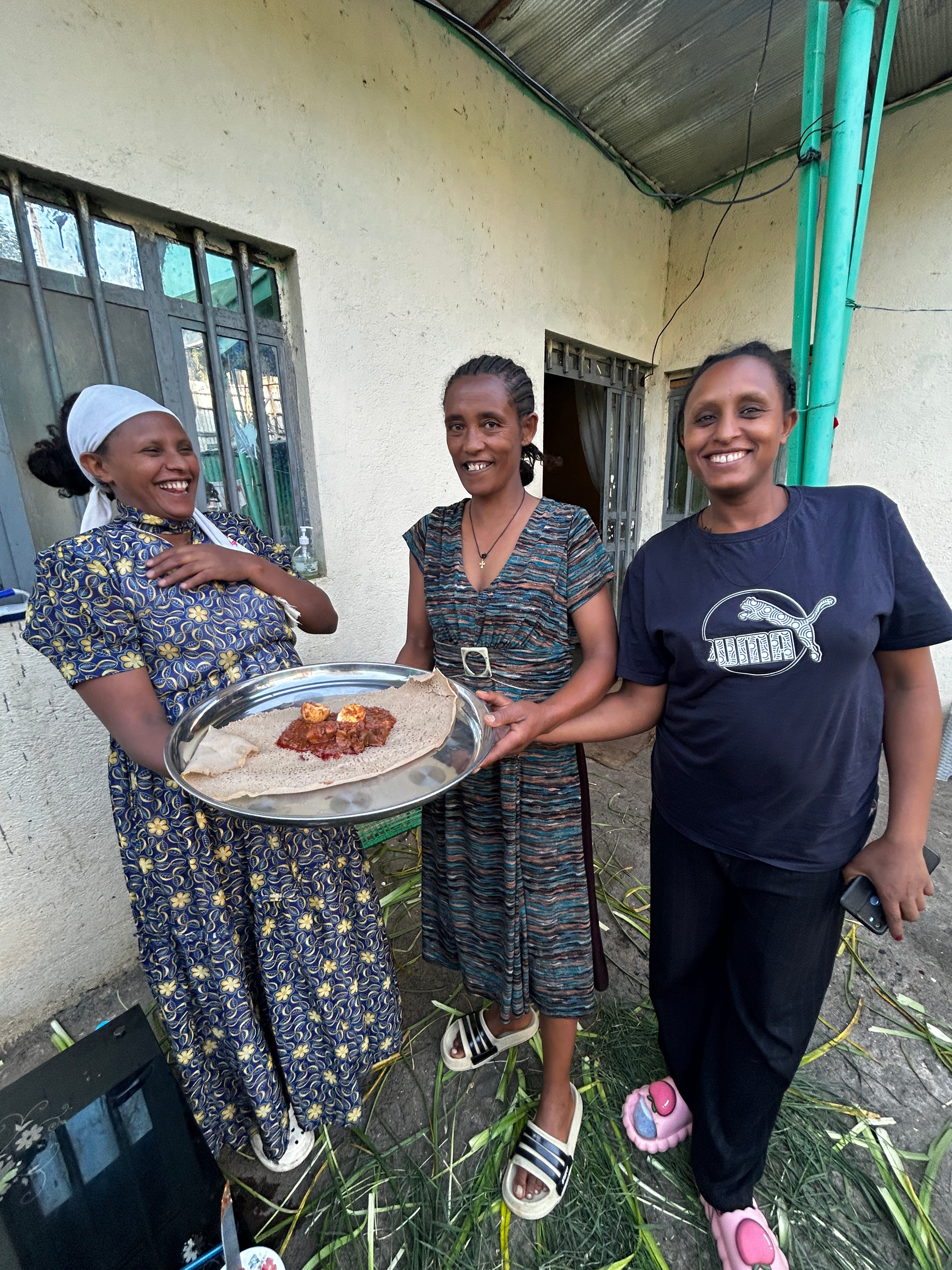
Serke is a chef by trade. She explained that she started cooking with her mother and family at the age of 11 or 12, as is common for most girls in Ethiopia. But she loves to cook and went to culinary school in Gondor and has worked at restaurants in the region for over 10 years now. I asked her, “What is your favourite dish to cook?” She replied, “I am asked to make a lot of burgers and pizzas in the restaurant because that is what today’s crowd wants. But I love to make Doro wat!”
The dish traces its history back to “wot” or stews in Ethiopian cuisine. Wots were slow cooked with small amounts of local herbs like korarima, besobela, and rue to name a few. Berbere was always used to spice up the stews. Sometime between the 15-17th century Doro wat was developed, most probably in the North of the country, most believe in the Amhara highlands. Chicken was used, and was at one time considered rare and expensive, but was combined with other luxury ingredients like niter kibbeh (Ethiopian spiced butter) and berbere spice blend. The magic was created and it spread rapidly from the North to across Ethiopia. There is also supposed to be some influences from Arabia and India that came along with trade. Some the the spices were incorporated but the stew is essentially Ethiopian.
The powerful Empress, Queen Mentewab, was co-ruler of Gondor, (1706-1773). During her reign Doro wat was regularly served at courtly functions and times of religious celebrations. She had women who were trained to make this dish, and it was served as a sign of power, totality and generosity.
Today no celebration or religious holiday, especially Easter and Meskel, is complete without Doro wat. It rules on the table, and is probably Ethiopia’s most popular dish.
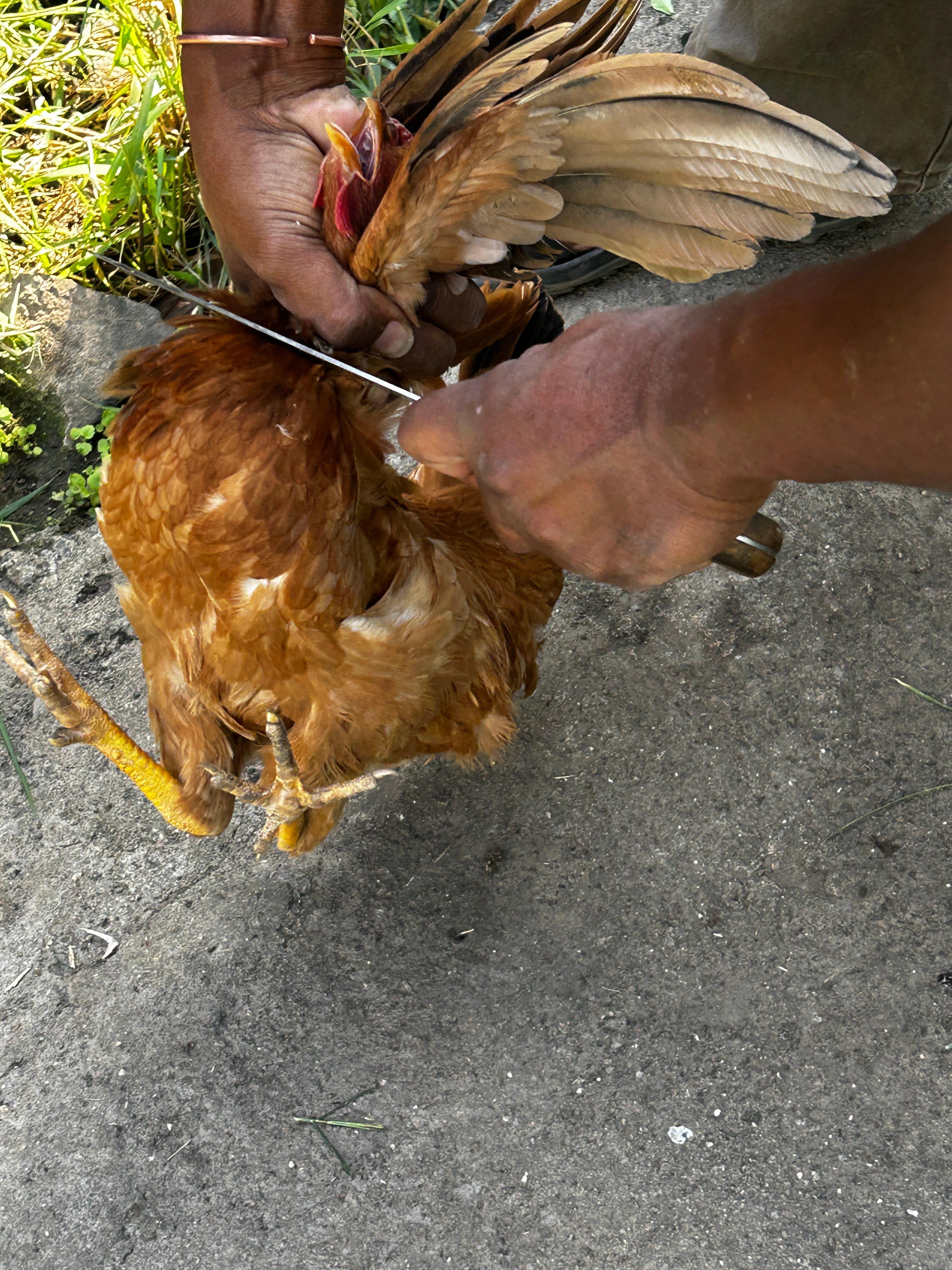
Serke had everything ready when we arrived at her home. After a warm greeting we got to work, and that meant killing the chicken. Reality suddenly jumped out at me, this is life, no pre-packaged chicken that was cleaned and stored in the freezer section. She explained that she likes to use village chicken, called “Kategna”. She explains that these chickens have a better flavour and less of a smell. The commercial “broiler” chickens are fatter but don’t taste as good. The village chickens are leaner, with less meat, and have to be cooked longer, so she buys adolescent chickens that are more tender. It is always the male member of the family who kills the chicken, a tradition that dates back to thenJudiac connections of ancient Ethiopia.
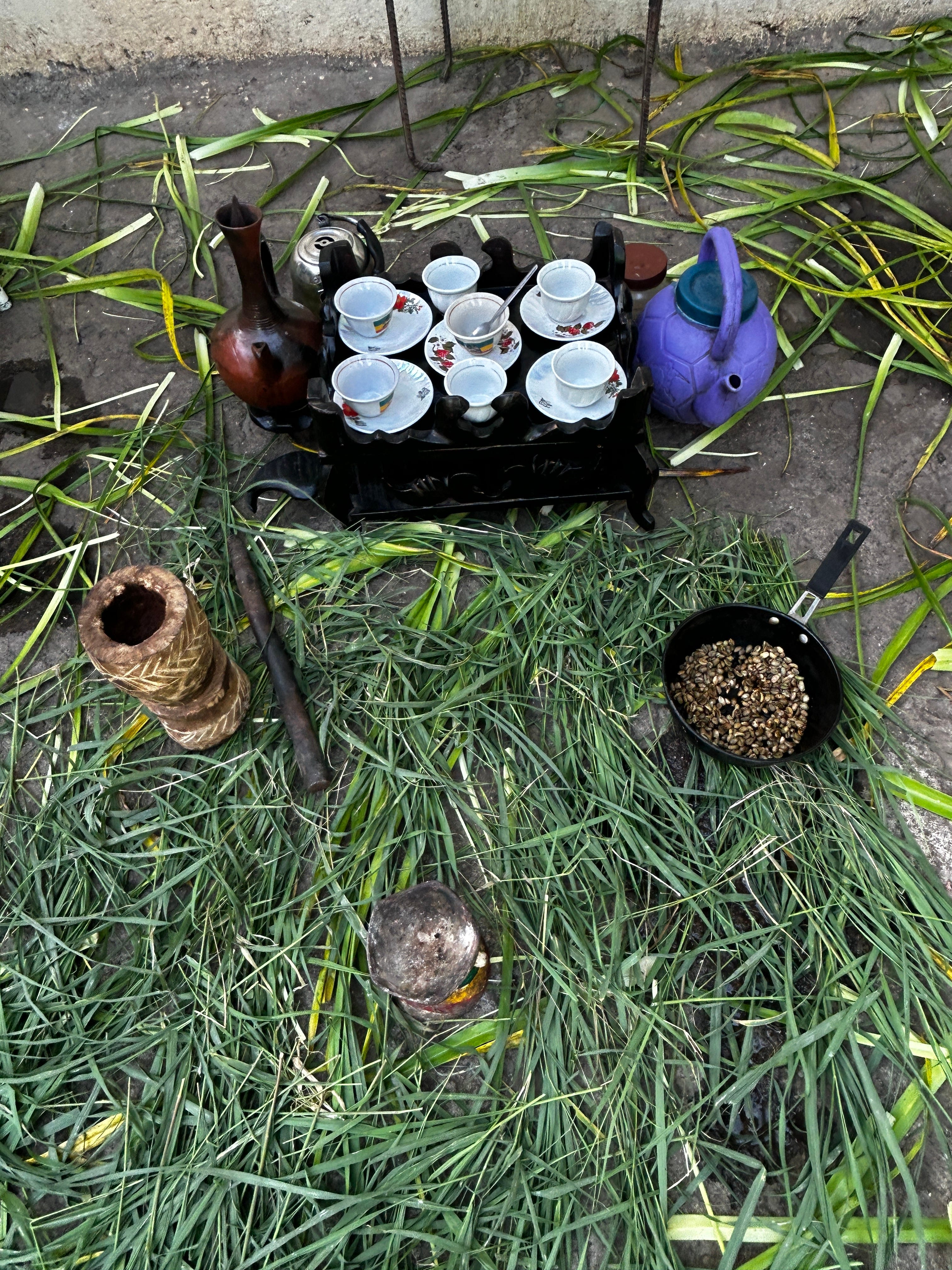
Serke, her sister and cousin chatted throughout the evening, each also occupied with a task. Her sister roasted beans for coffee, more on coffee later, and the cousin took on the task of de-feathering and cleaning the chicken. The conversations flowed, stilted at first and then easily. Soon a popcorn was popped in a pot, the old-fashioned style, and we munched away drinking delicious homemade beer in cattle horn glasses.
The traditional charcoal stove is called a Medeja. It is small and traditionally made of clay. More modern versions use a metal casing, which helps improve efficiency. It is 1000s of years old predating the Axumite civilization. The top is filled with small pieces of coal on which sits the pot directly. It is generally used for slow-cooking foods, especially stews or wats.
I learned that there is deep protocol in making this dish. The chicken can only be killed by a male member of the family. The chicken is cut into 12 distinct pieces, a specific piece that encompasses the backbone is called the horseman, because of how it looks. This piece is always given to the eldest male member of the family, or the patriarch. It is not necessarily the most meaty piece, but most coveted. Then the pieces are distributed depending on your status and age in the family.
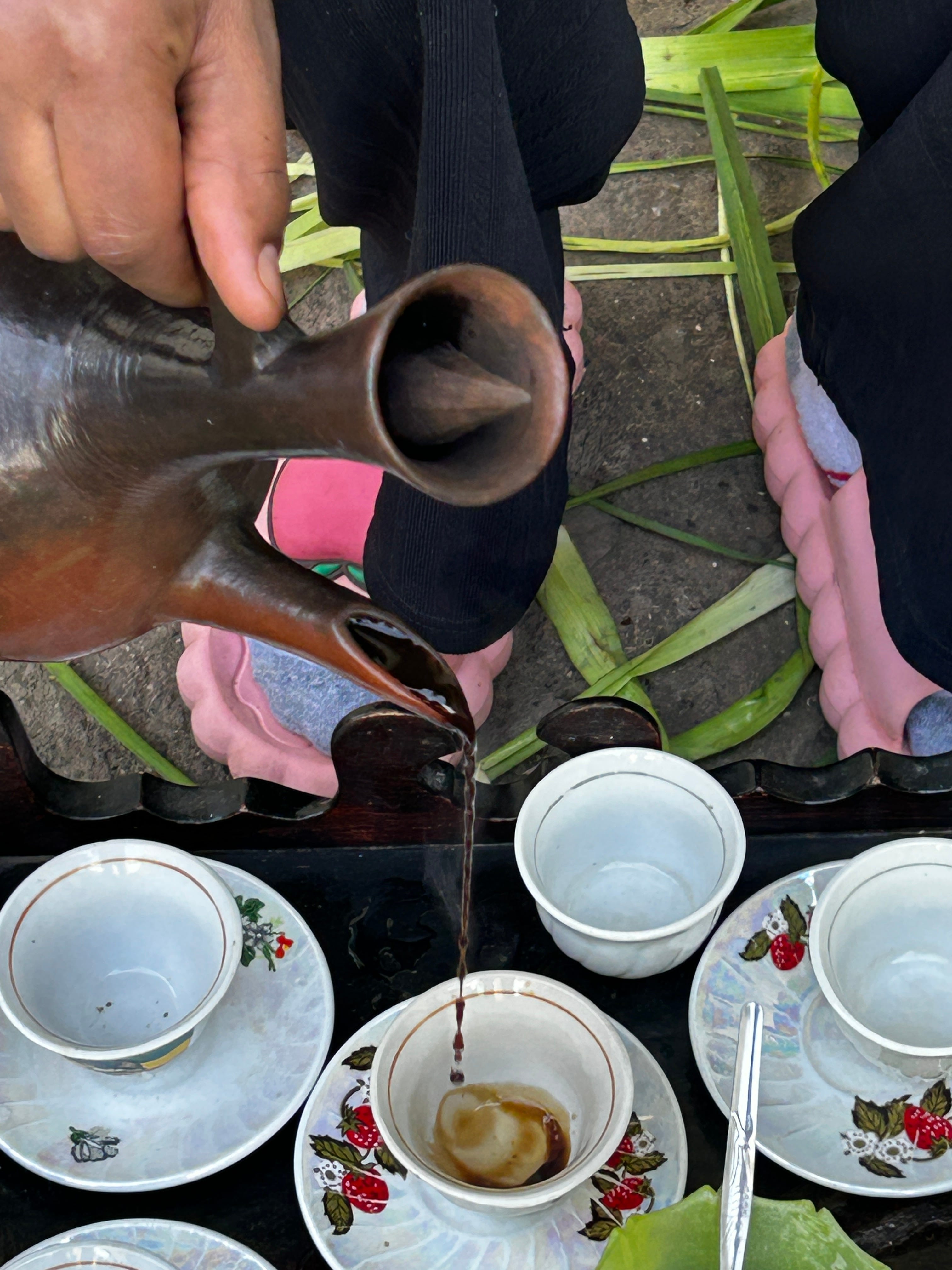
As we chatted about history and culture, coffee was poured, Serke would call me to the medeja, showing me the various steps, explaining technique and customs to me. It was almost dreamlike. The aromas were rising and I realized that this is not a dish that can be cooked without the entire community of village knowing it was being made. Since it is traditionally made for celebrations, folks would stop by to enquire what the occasion was.
While the stew cooked, the chicken liver was tossed in the charcoal, No piece of the animal goes to waste; the community is built on frugality and the use of everything. This is a deep-rooted history that arises from wars and difficult times. We chewed away at the liver, tender and smothered in the Berber onion mix for a pop of spice.


At last we sat down to eat, the rich stew soaking into the injera, the flavours bold. My palate was overloaded, the sourness of the injera complimented the dish. We ate hungrily, in small bites, making the flavours last. We sipped local beer and finished with a small glass of local grain liquor, fiery but smooth, settling the spices beautifully.
All of a sudden Serke’s two daughters ran in, they had finished school, and were hungry. The older one is 5 and her younger sister 3, both very shy but curious. Their mother loaded small plates of stew and injera for them, and they ate well. The younger one, sniffling often, the berbere at her limit of spice tolerance, but she sipped water and continued to eat, relishing the dish.


I went to Serke’s place to learn a recipe, and I learned about culture and history. I has now tasted Serke’s version of this dish, it was fantastic. I asked her, “What makes your Doro wat so special?” She thought a bit and replied, “Commercial kitchens rush the cooking, and use flavour enhancers like Knorr soup cubes and more. This spoils the. traditional taste. I also use the special way to clean and wash the chicken that is important. And slow-cooking, the flavour is better.”
I think she missed something, she missed love and grace, years of tradition and practice. This dish is so much more than a favourite of a nation, it is the soul of the nation!
The Recipe:
Ingredients:
1 adolescent chicken
2 limes
1 tablespoon salt
1 1/2 kg onions, finely diced
1/2 cup oil
10 tablespoons berbere spice mix (see recipe below)
2 cups water
2 heaped teaspoons garlic
Salt, to taste
4 hard boiled eggs, peeled
3 tablespoons niter kibbeh (Ethiopian spiced butter)
Injera, to serve
For the berbere spice mix:
1 kg dried berbere qaria chillies
200 grams fresh garlic with skin
35 grams fresh ginger
15 grams Rue herb (locally called Tena adam, scientifically Ruta graveolens)
50 grams Ethiopian sacred basil (locally called Besobela, scientifically ocimum basilicum)
50 grams Ethiopian aframomum corrorima (locally called Korarima, scientifically zingiberaceae)
15 grams black cumin (locally called tikur azmud , scientifically bunium persicum) (kalonji)
15 grams white cumin or carom seeds (locally called Nech azmud, scientifically trachyspermum ammi)
200 grams salt
25 grams coriander seeds
50 grams cumin seeds, local name kemune
To make the Berber spice mix:
Pound the garlic lightly and spread out to dry on a mat. It can take up to two weeks for the garlic to completely dry out.
Peel and pound the ginger lightly and spread out to dry. It can take up to two weeks for the ginger to dry out completely.
When ready to make the spice mix, dry roast the seeds individually until aromatic and fragrant. Cool completely. Mix all the ingredients together and grind to a very fine powder.
Store in an airtight container until needed. A typical family will make 5-10 kg of the spice mix and have it last for 6-8 months.
To make the stew:
De-feather the killed chicken by pouring boiling water over it and allowing it to soak for 3-4 minutes. Strip off the feathers. Roast the chicken briefly over a fire lightly burning it on all sides. This removes any small feathers and embedded feather quills. Cut the chicken into 12 pieces. Wash the chicken throughly in 3 changes of water, and then again in water with salt and lime juice for 3-4 minutes. Allow the chicken to soak in this for 5 minutes. Serke explained that the last washing step cleans the chicken throughly and the chicken smell goes away.


Meanwhile, add the onions to a pot and set on a stove or medeja traditional charcoal stove on low heat. Cook slowly for about 15 minutes until the onions are very soft. This is done on slow heat so as not to colour the onions or burn them.
Add the oil an cook for 10 minutes frying the onions slowly, keeping them almost white. Add the berbere spice powder and salt and mix well. Cook on low heat for 20-25 minutes until the onions have dissolved and the mix is rich and saucy.


Add the chicken pieces and cook for 15 minutes until the meat is white and sealed. At this point add 1/2 cup water so that the spices do not stick to the bottom and burn. Cook for 50-60 minutes, all the while on a slow flame. On a medeja, the charcoal was fanned occasionally and it was kept at just the right temperature. Check to make sure the chicken is very tender, it should shred between your fingers easily. The stew should be at a minimal simmer all the time. Add more water as needed for a thick stew.


Add the eggs, prick them to allow the sauce to penetrate them, and simmer for 10 minutes. Add the niter kibbeh and mix in. Simmer for 5 more minutes.


Serve hot on injera.
What a fantastic experience!